The problem
A paper stamp card tells the shop nothing. Not who comes back, not when someone last came in, not who to tell about a new flavour. The loyalty was real; the record of it was a card in somebody's wallet.
The membership pass
A glossy black pass showing points, progress to the next reward, a personal QR code and recent activity. There is no login — the QR is the identity, so a member goes from scan to card in one tap.

The counter
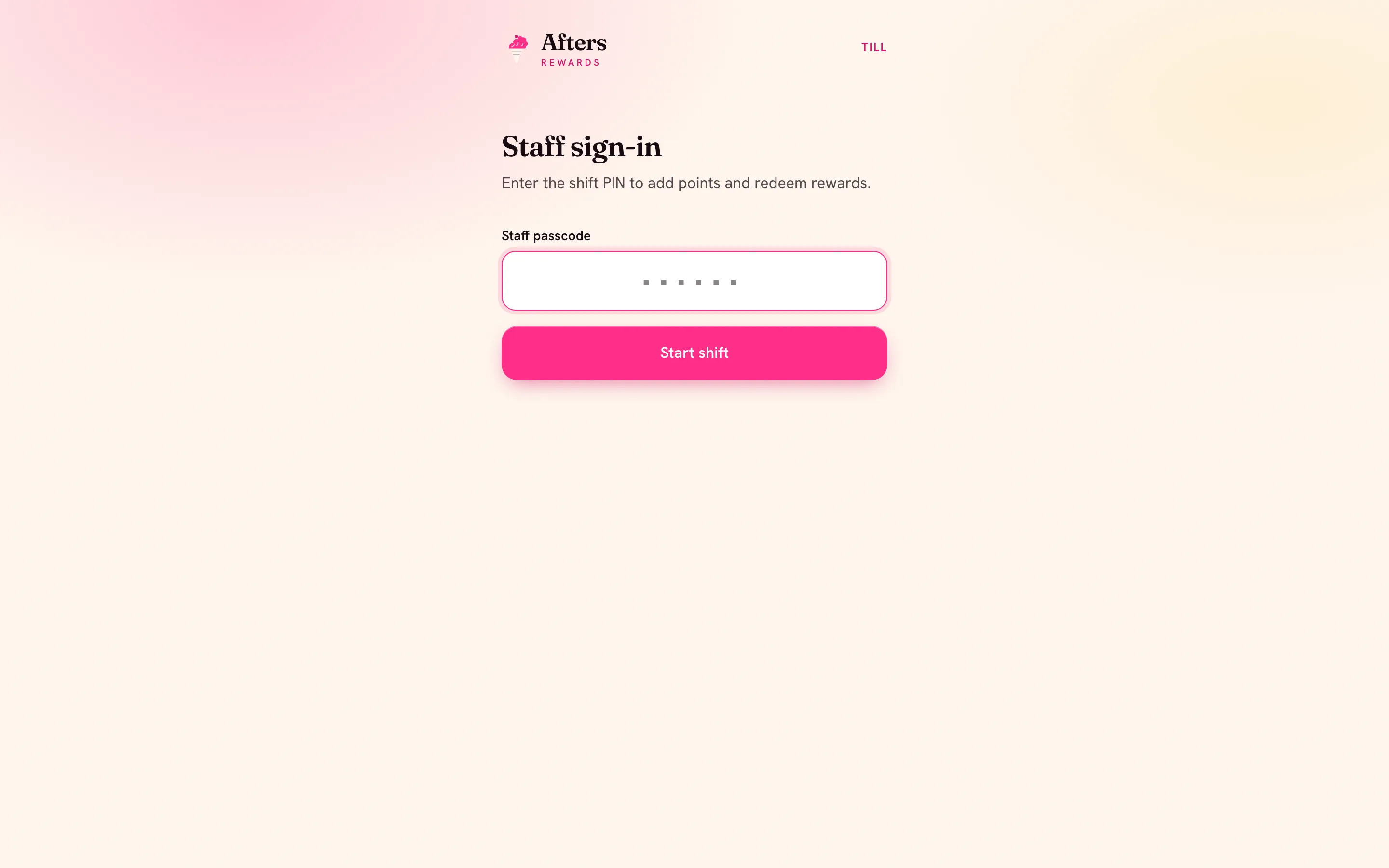
Staff unlock a PIN-gated screen, find someone by mobile or by scanning their code, and add what they spent. Points accrue at one per pound against real counter spend, and rewards redeem on the spot.
The owner's view
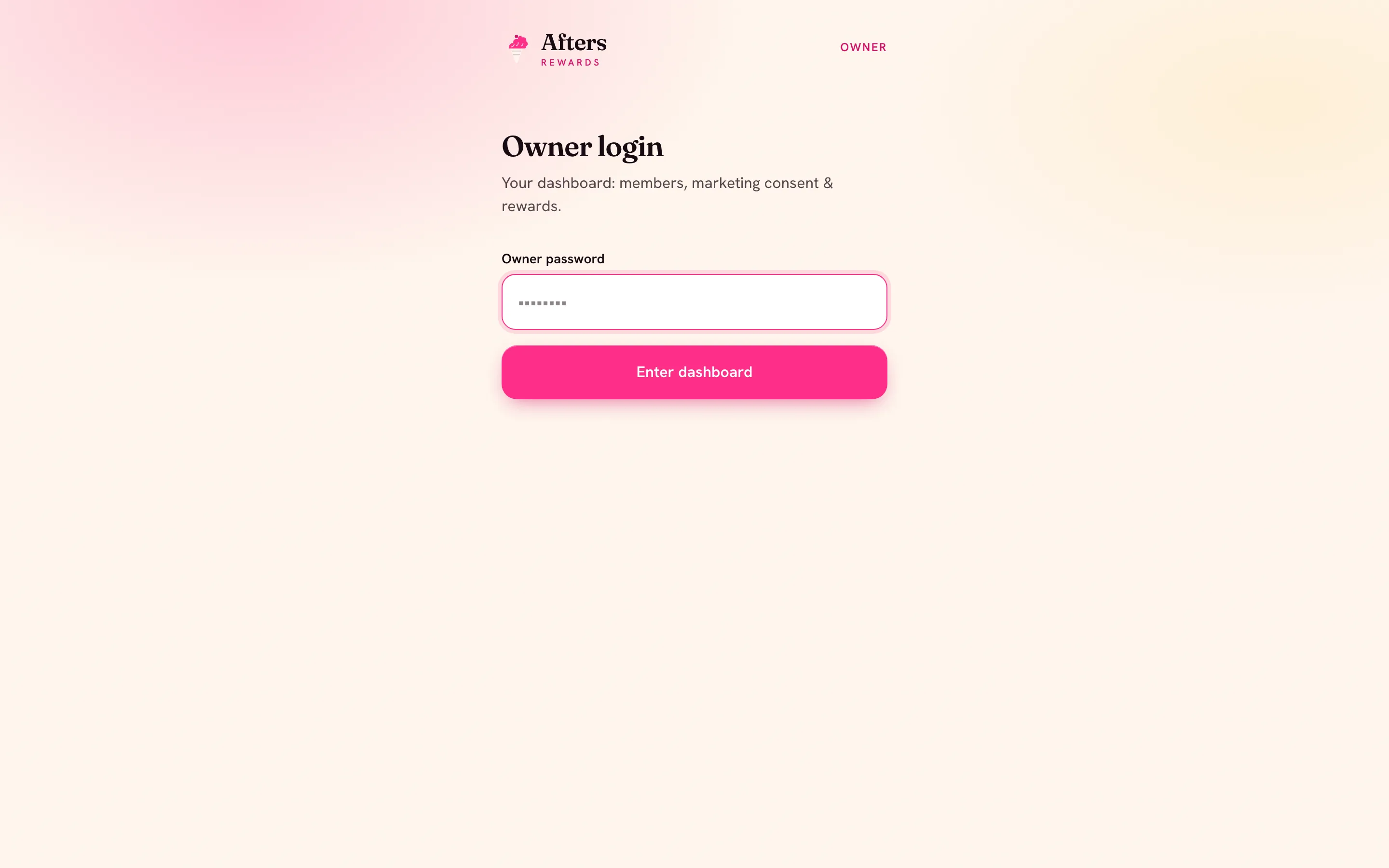
Member stats, a filterable marketing list, editable reward tiers, and a CSV export that carries the consent fields with it.
What was hard
Identity without a login
Nobody is creating an account while holding a milkshake. The personal QR token is the identity, so there is no password to forget and no sign-in step between a customer and their points.
Consent that is still usable in a year
SMS and email opt-ins are captured unticked, and each one is stored with a timestamp and a consent version against the member. That is the difference between a marketing list you can legally use under PECR and one that is a liability.
On a phone
Most of Afters Rewards’s customers arrive on a phone, so that is the width the design was decided at.