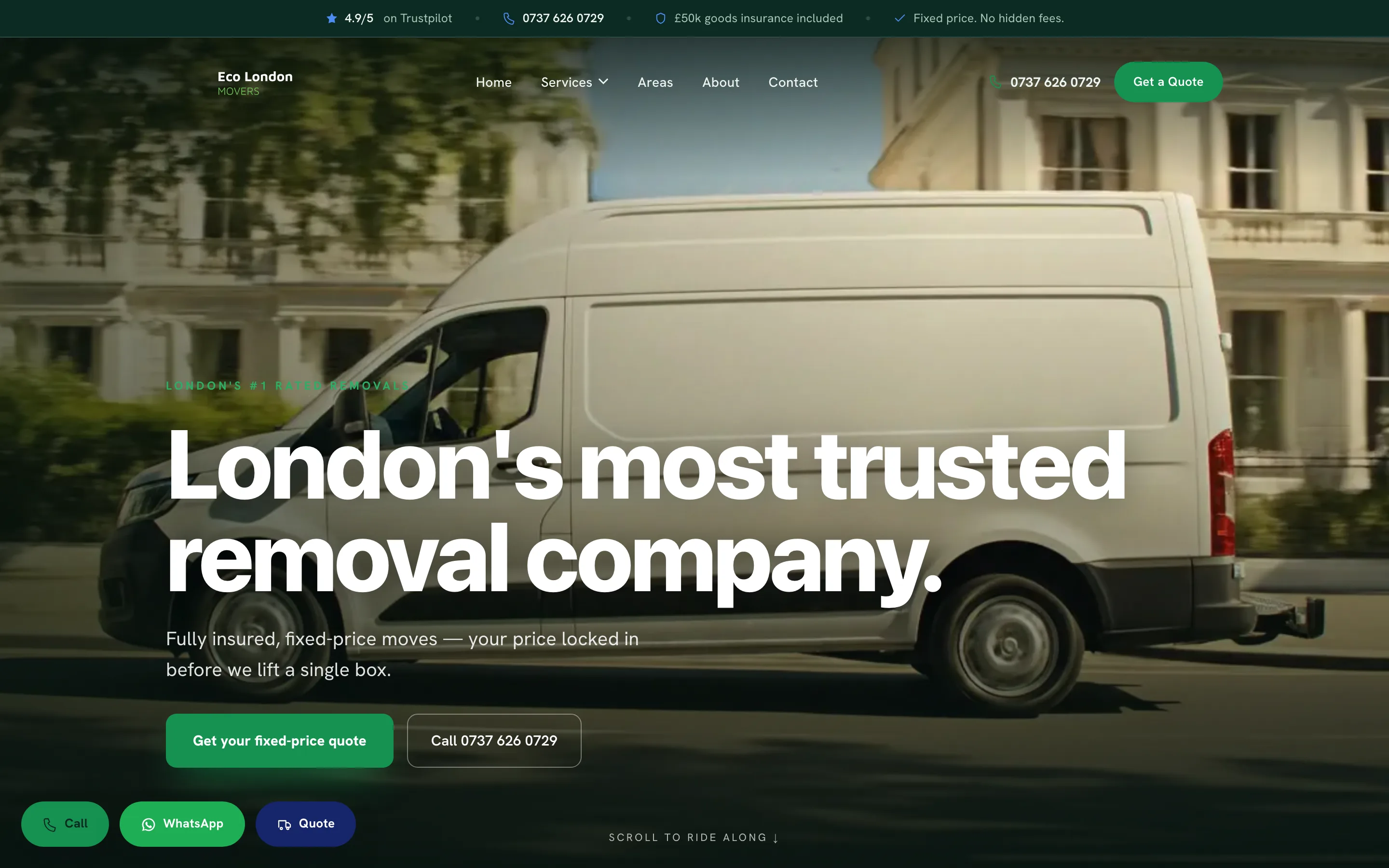
The problem
Every enquiry the old site produced went somewhere the business did not control. Getting the website back meant getting the leads back — and doing it without losing the search rankings the old URLs had built up.
Seventeen pages, same URLs
The new site mirrors the old URL structure exactly, so the cutover does not reset anything Google already knew. The pages that earn money are bespoke; the rest are templated from shared content files so they cannot drift apart.

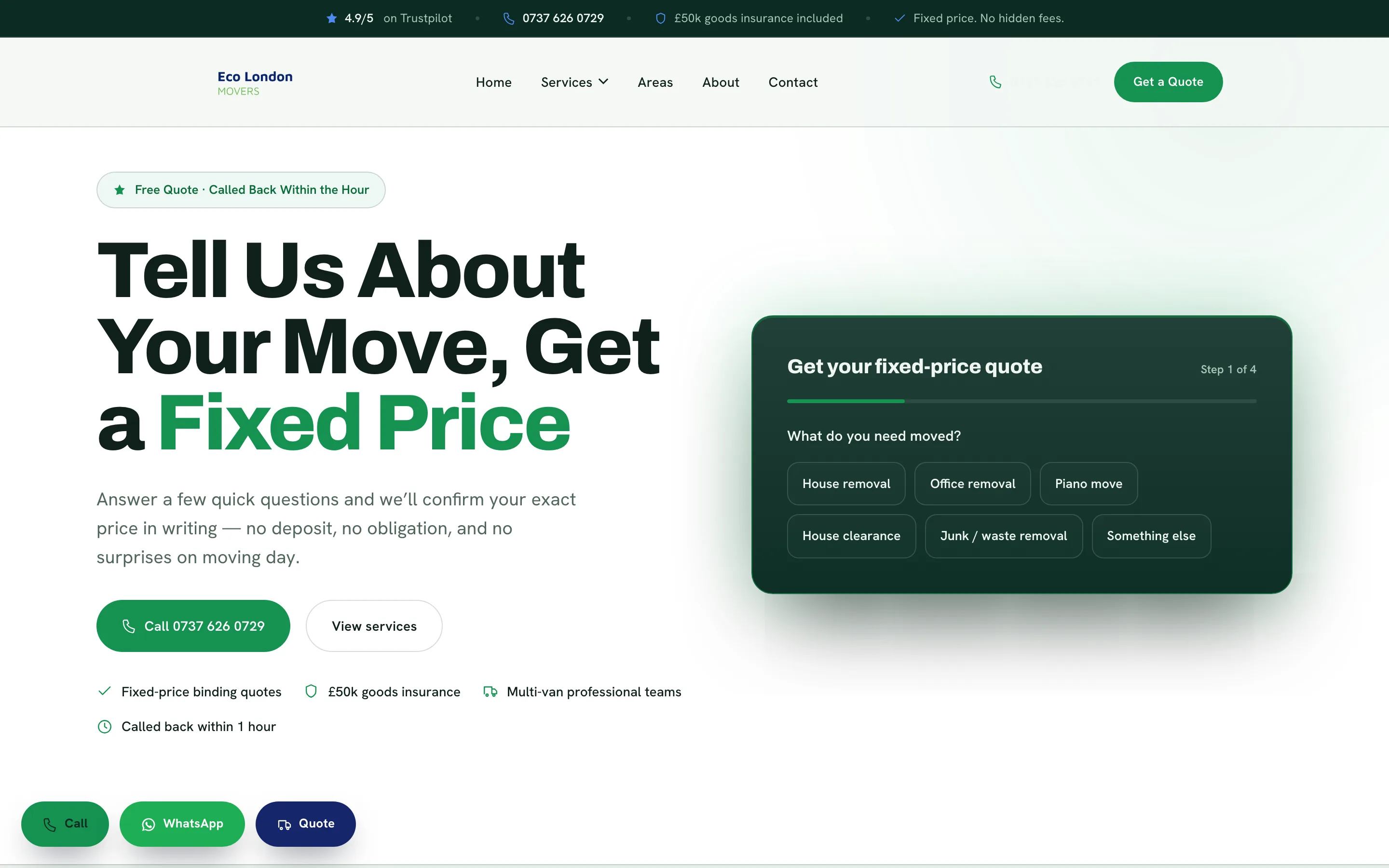
A quote form that asks like a person
A multi-step form sitting beside the hero, asking a few things at a time instead of presenting a wall of fields.
Leads that land where the business says
Each enquiry is written to the company's own database first, then fanned out through n8n to a spreadsheet, a direct message to the director, and a central inbox.

What was hard
Never losing a lead again
The whole point of the rebuild. Every enquiry is saved to a database the client owns before anything is forwarded, so if a downstream service is down the lead still exists somewhere they control.
Moving seventeen URLs without losing Google
New URLs mirror the old ones one for one, with a sitemap, robots rules and MovingCompany structured data, so a rebuild does not read to a search engine as a brand new site.
Taking the fake urgency out
The old copy leaned on invented scarcity and carried inconsistent phone numbers. Every number was checked against a single source of truth and the countdown pressure was removed.
On a phone
Most of Eco London Movers’s customers arrive on a phone, so that is the width the design was decided at.